







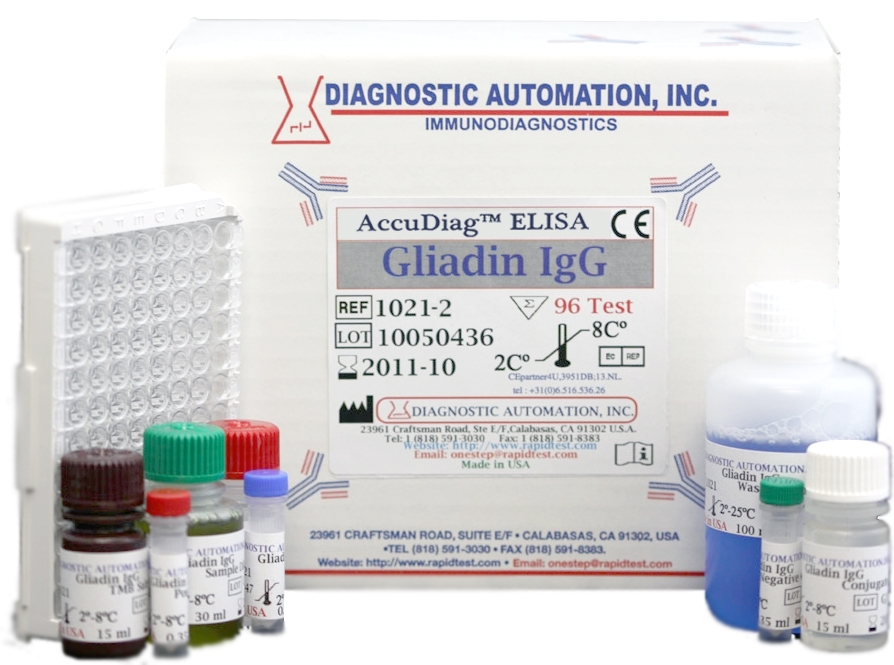
Gliadin IgG ELISA kit
| Name |
Gliadin IgG ELISA test |
|---|---|
| Full name |
Humann Gliadin IgG ELISA Test Kit |
| Category Name | Autoimmune Disease kits |
| Test | 96 |
| Method | ELISA method: Enzyme Linked Immunosorbent Assay |
| Principle | ELISA - Indirect; Antigen Coated Plate |
| Detection Range | Qualitative & Semi Quantitative: Positive, negative, cut off |
| Sample | 10ul serum |
| Specificity | 96.60% |
| Sensitivity | 95.60% |
| Total Time | ~60 min |
| Shelf Life | 12 Months from the manufacturing date |
 |
 |
 |




Gliadin IgG ELISA kit description:


Diagnostic Automation Gliadin IgG Test System is intended for the qualitative and semi-quantitative detection of IgG-class antibodies to Gliadin in human serum. The Test System is intended to be used as an aid in the diagnosis of gastrointestinal disorders, mainly Celiac Disease.
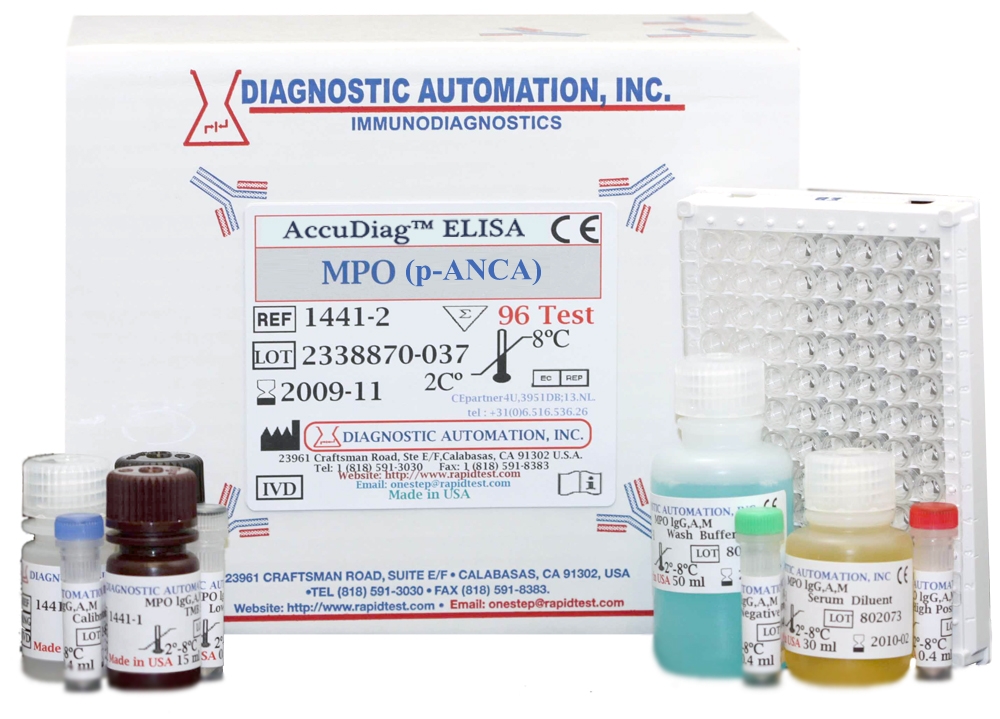
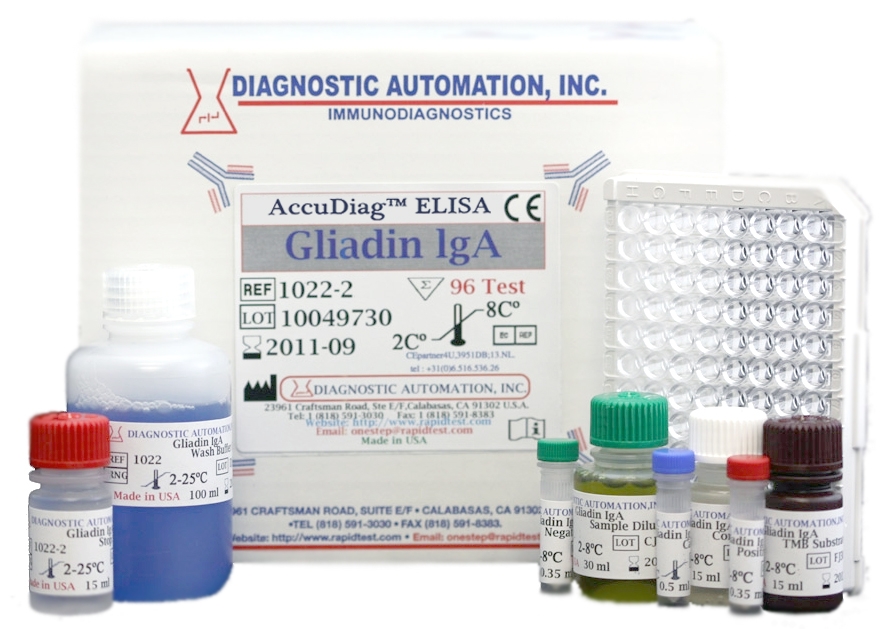
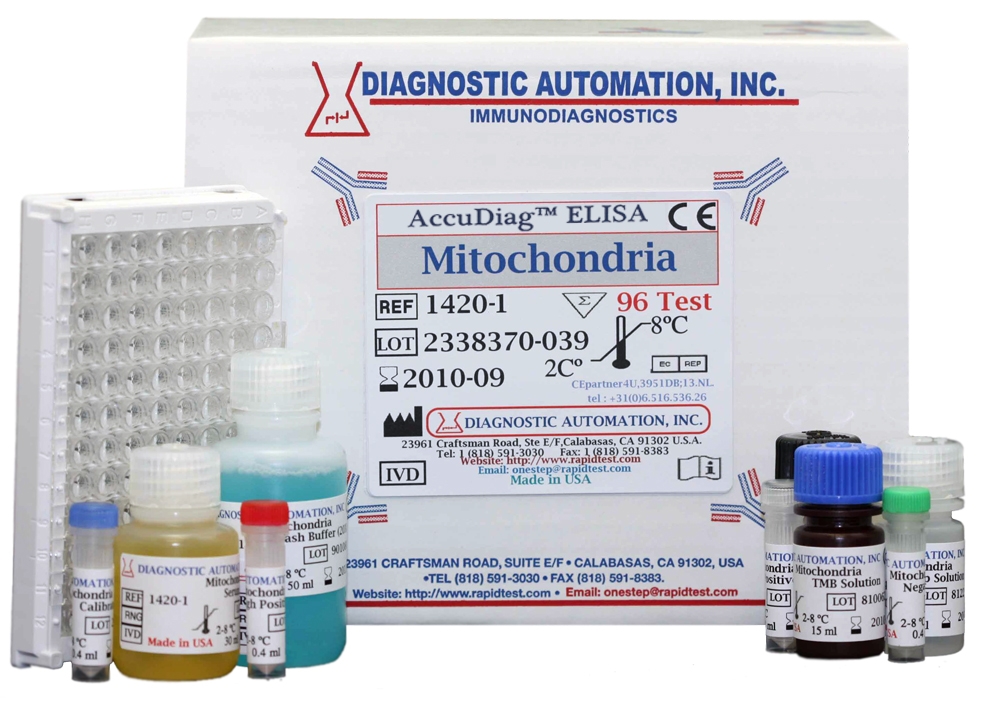
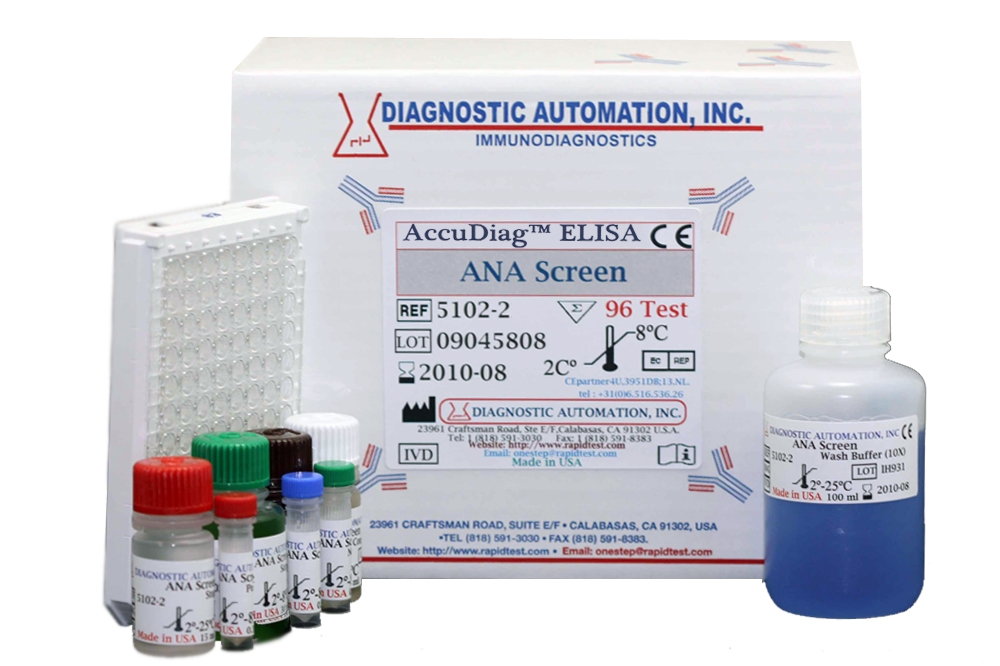
Material Provided with Gliadin IgG ELISA Kit:
1. Microplate: wells coated with Inactivated Antigen
2. Gliadin IgG ELISA test Calibrator:Human serum
3. Gliadin IgG EIA Positive Control:Human Serum
4. Gliadin IgG EIA Negative Control:Human Serum
5. Diluent solution
6. Gliadin IgG EIA HRP conjugate reagent
7. TMB substrate solution
8. Stop solution
9. Wash buffer concentrate 10x
Materials Required, not Provided:
1. Precision pipettes
2. Distilled or deionized water
3. EIA kit Microplate Washer
4. EIA kit Microplate Reader with a 450 nm
Gliadin IgG ELISA Kit Background Information:
Celiac disease is an inflammatory disorder of the small intestine. The prolamines of certain cereals, mainly the gliadins of wheat, induced Celiac disease. This permanent intolerance to Gliadin results in intestinal villous flattening and crypt hyperplasia in susceptible individuals. Immune reactions to Gliadin are likely to play a role in the pathogenesis of the disease since research demonstrates that both humoral and cell-mediated responses occur in the peripheral blood and in the gut of celiac patients.
Gliadin IgG ELISA Test Principle:
Gliadin IgG ELISA test kit is designed to detect IgG class antibodies to Gliadin in human sera. Wells of plastic microwell strips are sensitized by passive absorption with Gliadin antigen. The test procedure involves three incubation steps. For additional details please refer to the instructions for use.
Notable features of Autoimmune Disease ELISA Kits:
User-friendly directions and explanation of test procedures
Simple and safe reagent preparation
Clear instructions on specimen collection
Comprehensive package of required materials
Explicit quality control and storage guidelines
Reliable and easy-to-read test results
Product inserts for all Autoimmune ELISA kits follow a similar method. See the Gliadin IgG ELISA Kit product insert for specific details on preparation, procedures, quality control, and test result interpretation.
Diagnostic Automation Inc. also provides other Autoimmune Disease ELISA Kits. For more information about ELISA Kits, Rapid Tests, IFA Kits, CLIA Test Kits, or Serology tests, please see our website home page, or contact our Customer Service Representatives at 818-591-3030 .