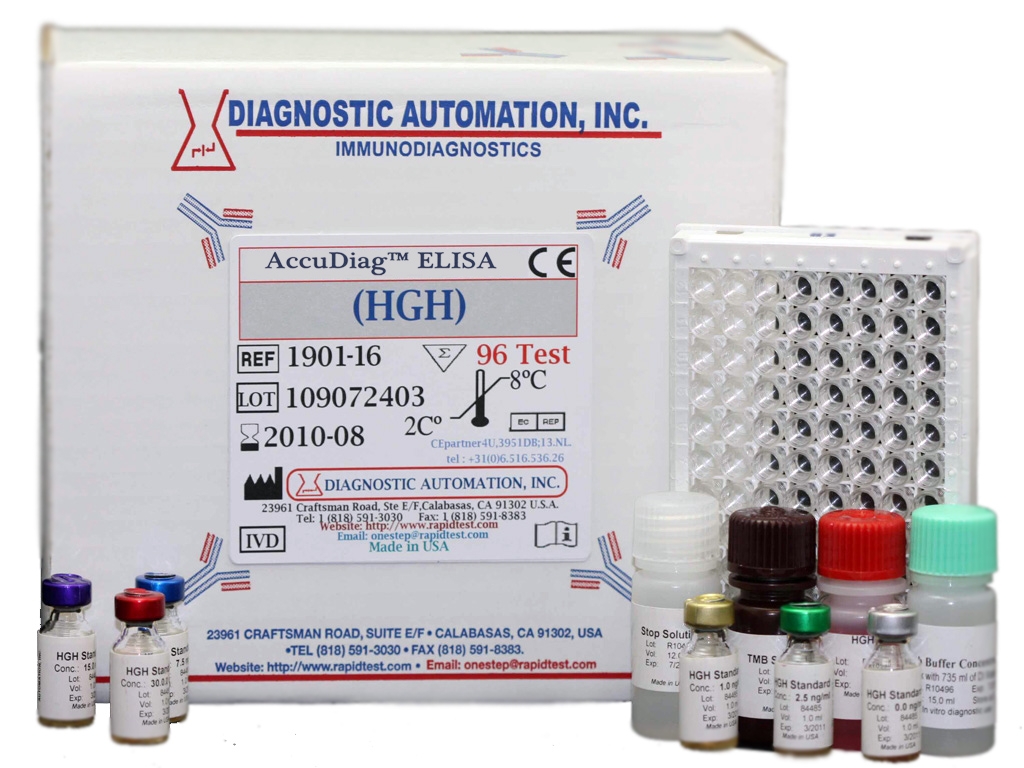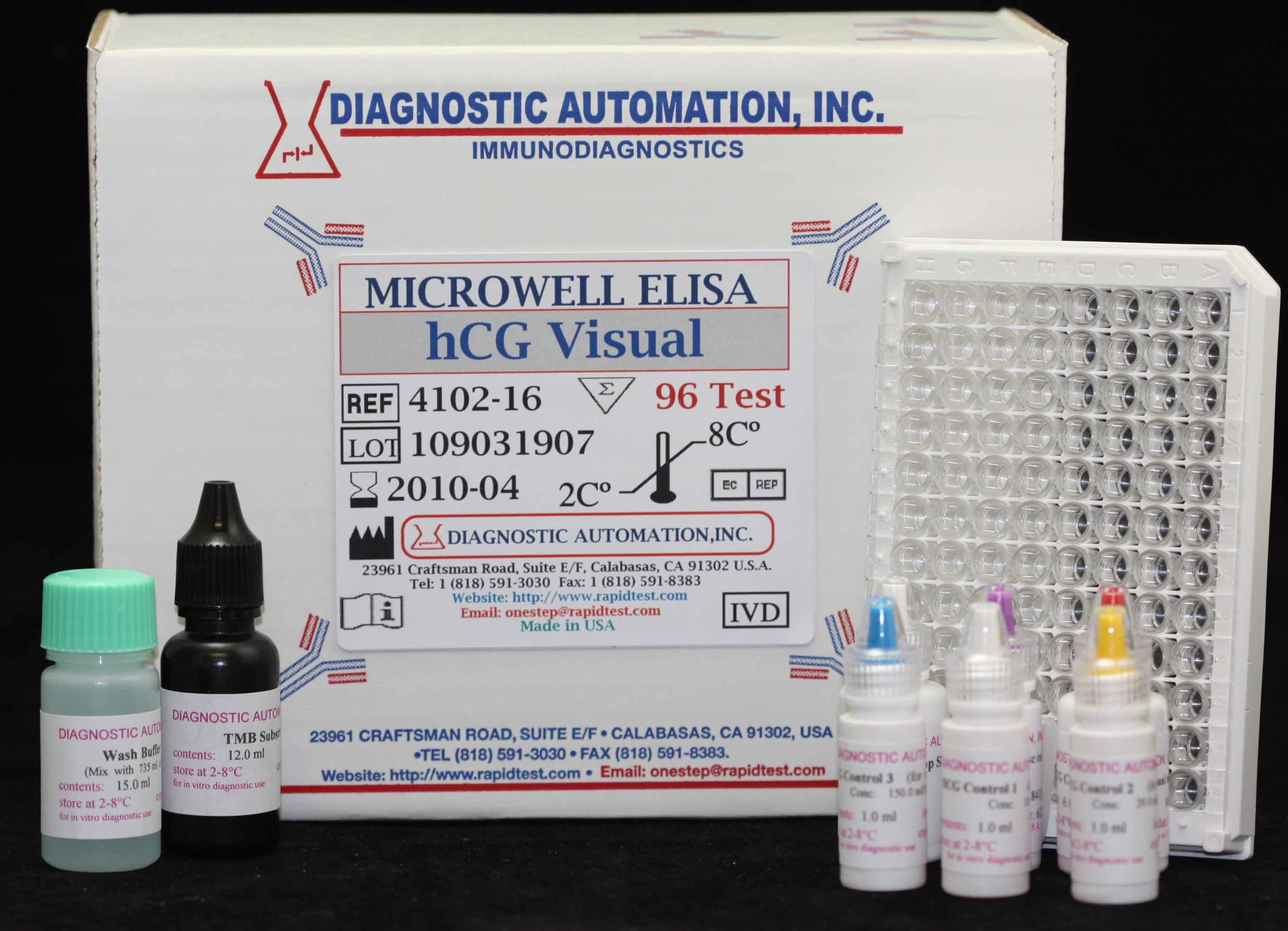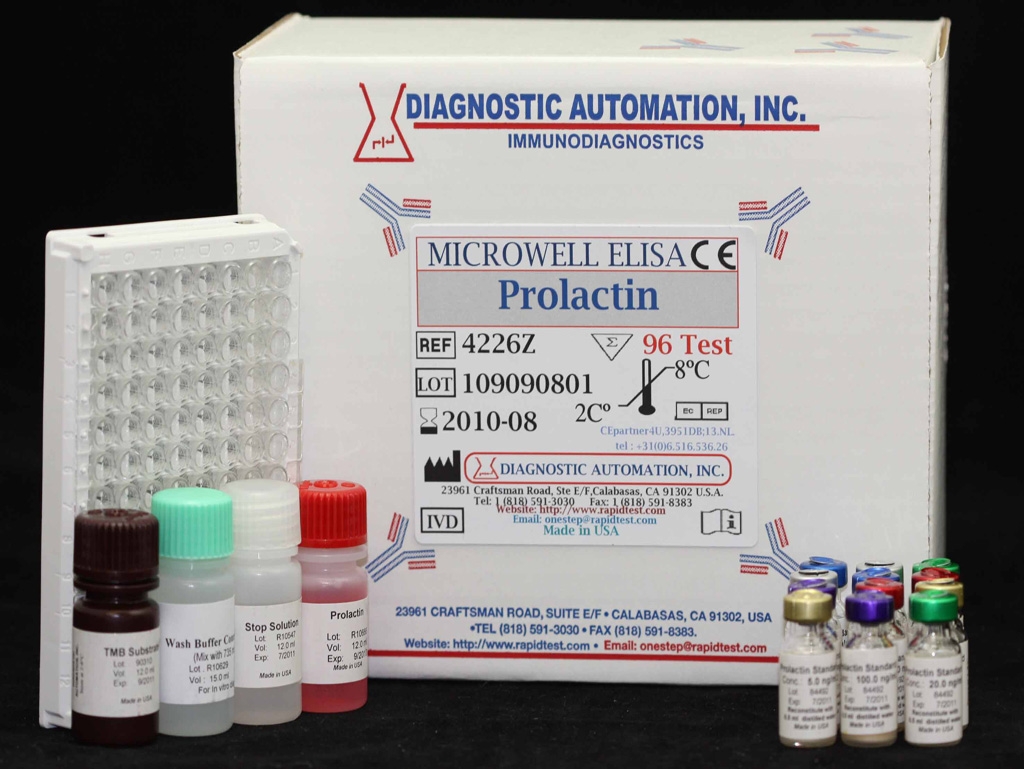








FSH ELISA kit
| Name |
FSH ELISA Test |
|---|---|
| Full name |
Human FSH ELISA Test Kit |
| Category Name | Fertility ELISA kits |
| Test | 96 |
| Method | ELISA method: Enzyme Linked Immunosorbent Assay |
| Principle | ELISA principle- Peroxidase Conjugated Sandwich ELISA |
| Detection Range | 0-200 mIU/mL |
| Sample | 50uL Serum |
| Specificity | 95% |
| Sensitivity | 2.0 mIU/ml |
| Total Time | ~80 min |
| Shelf Life | 12 Months from the manufacturing date |
 |
 |
 |




FSH ELISA kit description:

The Diagnostic Automation FSH EIA test kit is for the quantitative determination of follicle-stimulating hormone (FSH) concentrations in human serum
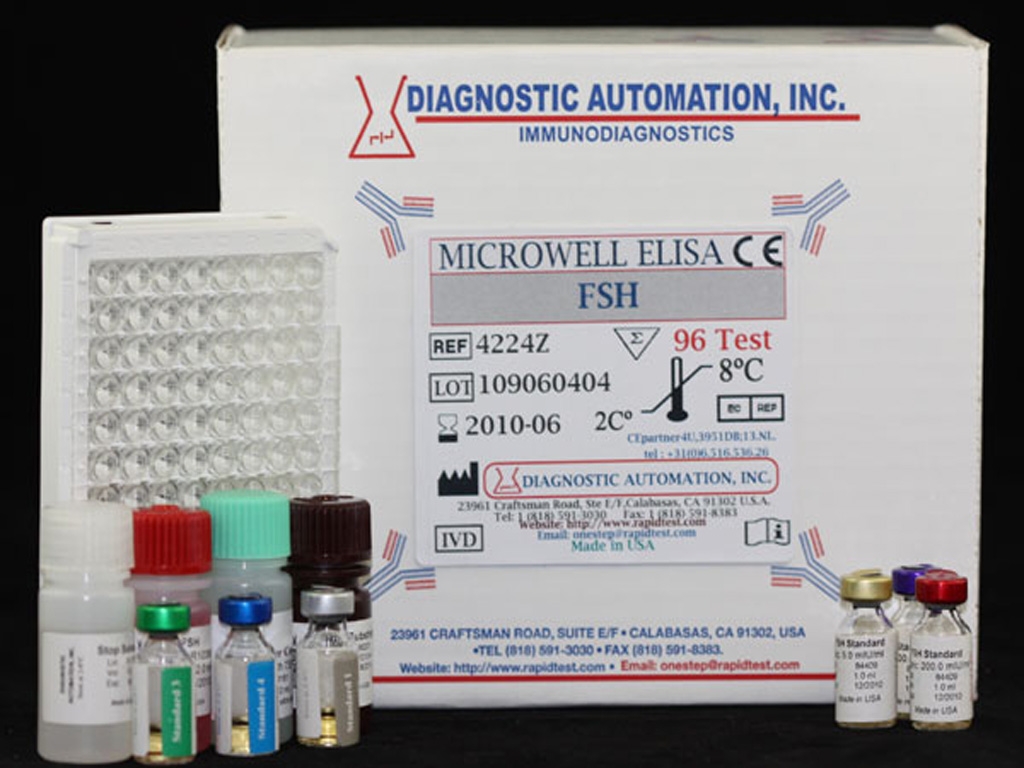
Material Provided with FSH ELISA Kit:
1. FSH EIA Kit Antibody-coated microtiter wells
2. Reference standard set: 0, 5, 20, 50, 100, 200 mIU/ml
3. FSH Elisa Kit Enzyme conjugate reagent
4. TMB Substate
5. FSH Test Stop Solution
6. Wash Buffer Concentrate 50X
Materials Required, not Provided:
1. Precision pipettes
2. Distilled or deionized water
3. EIA kit Microplate Washer
4. EIA kit Microplate Reader with a 450 nm
FSH ELISA Kit Background Information:
Increased intraovarian estradiol production occurs as follicular maturation advances, thereupon stimulating increased FSH receptor activity and FSH follicular binding. FSH, LH and estradiol are closely related in supporting ovarian maturation in women. FSH levels are elevated after menopause, castration, and in premature ovarian failure. The levels of FSH may be normalized through the administration of estrogens, which demonstrate a negative feedback mechanism. Abnormal relationships between FSH and LH and between FSH and estrogen have been linked to anorexia nervosa and polycystic ovarian disease. Although there are significant exceptions, ovarian failure is indicated when random FSH concentrations exceed 40 mIU/mL, which can be determined using the FSH ELISA test kit. High levels of FSH in men may be found in primary testicular failure and Klinefelter syndrome. Elevated concentrations are also present in cases of starvation, renal failure, hyperthyroidism, and cirrhosis.
FSH ELISA Test Principle:
The FSH ELISA Test Kit is based on a solid phase enzyme-linked immunosorbent assay. The assay system utilizes a polyclonal anti-FSH antibody for microtiter wells immobilization and a mouse monoclonal anti-FSH antibody in the antibody-enzyme horseradish peroxidase conjugate solution. The test sample is allowed to react simultaneously with the antibodies, resulting in FSH molecules being sandwiched between the solid phase and enzyme-linked antibodies. For additional details please refer to the instructions for use.
Diagnostic Automation Inc. also provides other Autoimmune Disease ELISA Kits. For more information about ELISA Kits, Rapid Tests, IFA Kits, CLIA Test Kits, or Serology tests, please see our website home page, or contact our Customer Service Representatives at 818-591-3030 .