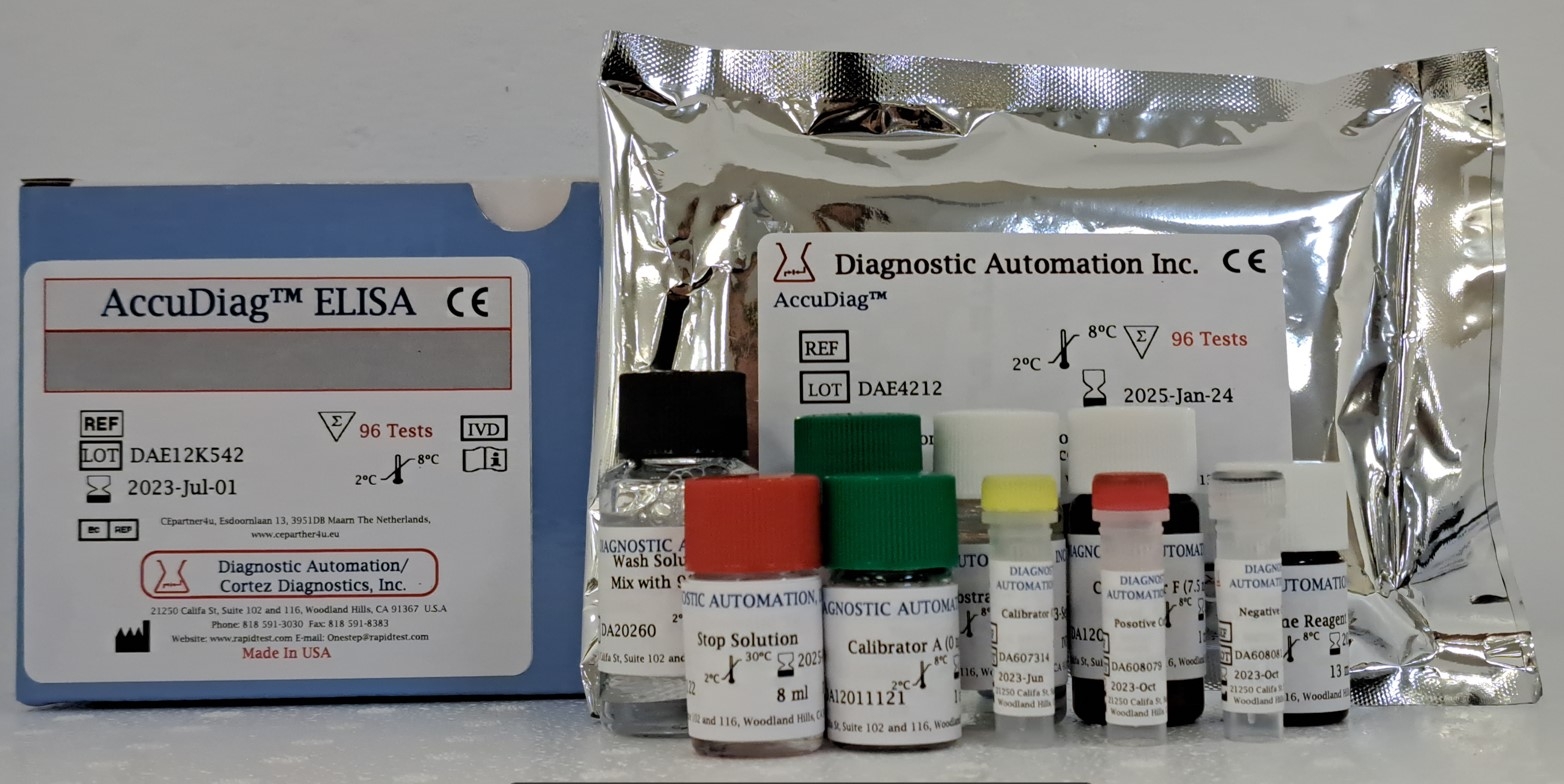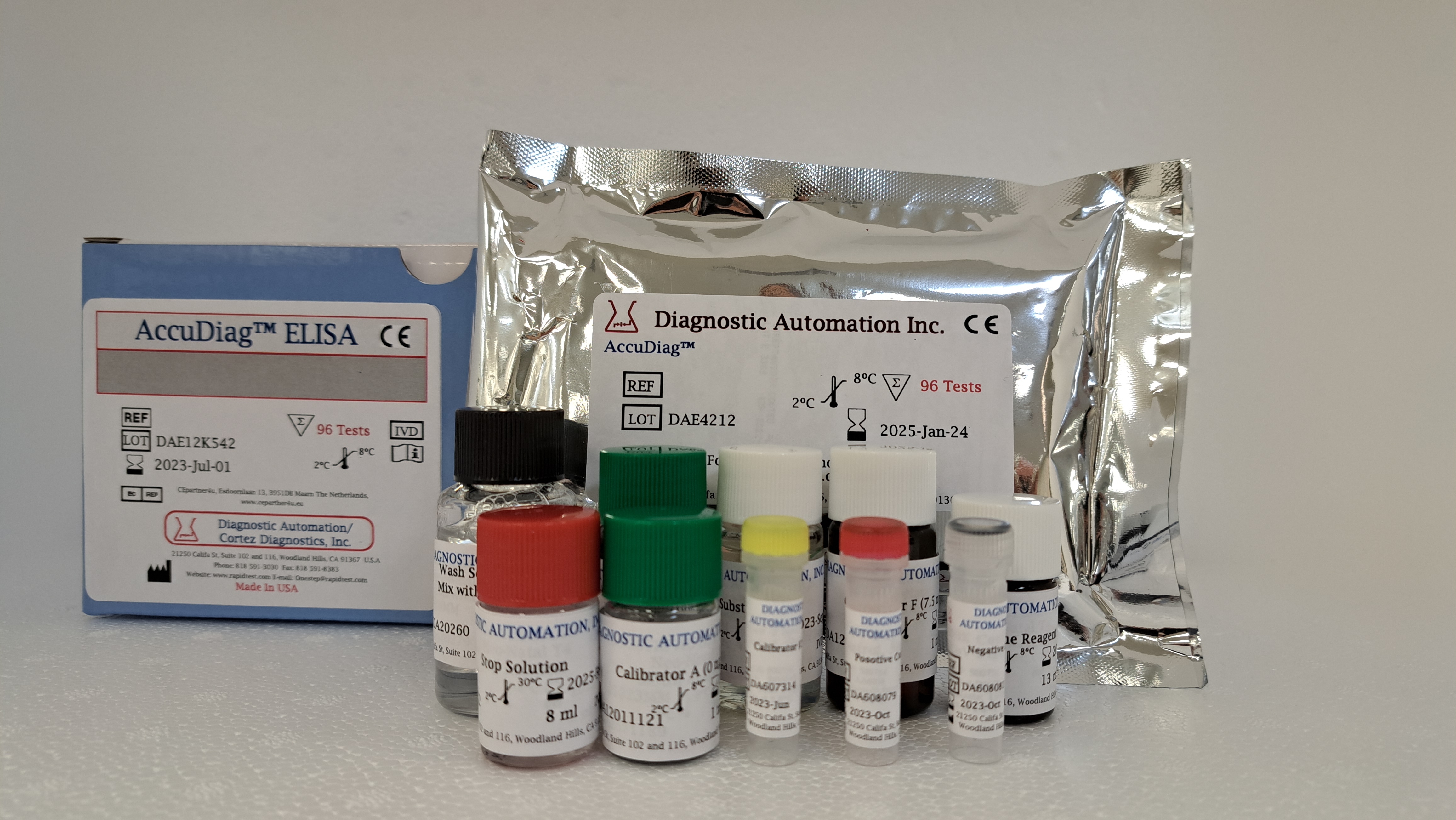








TSH Ultra Sensitive ELISA kit
| Name |
UTSH Sensitive ELISA Test |
|---|---|
| Full name |
Human TSH Ultra Sensitive ELISA Test Kit |
| Category Name | Thyroid ELISA kits |
| Test | 96 |
| Method | ELISA method: Enzyme Linked Immunosorbent Assay |
| Principle | ELISA - Indirect; Antibody Coated Plate |
| Detection Range | Quantitative: 0-10uIU/mL |
| Sample | 100ul Serum |
| Specificity | 96% |
| Sensitivity | 0.05uIU/mL |
| Total Time | ~140 min |
| Shelf Life | 12 months from the manufacturing date |
 |
 |
 |




TSH Ultra Sensitive ELISA kit description:
The Diagnostic Automation TSH Ultra Sensitive ELISA (U-TSH ELISA) is intended for the quantitative determination of the thyroid stimulating hormone (TSH) concentration in human serum.
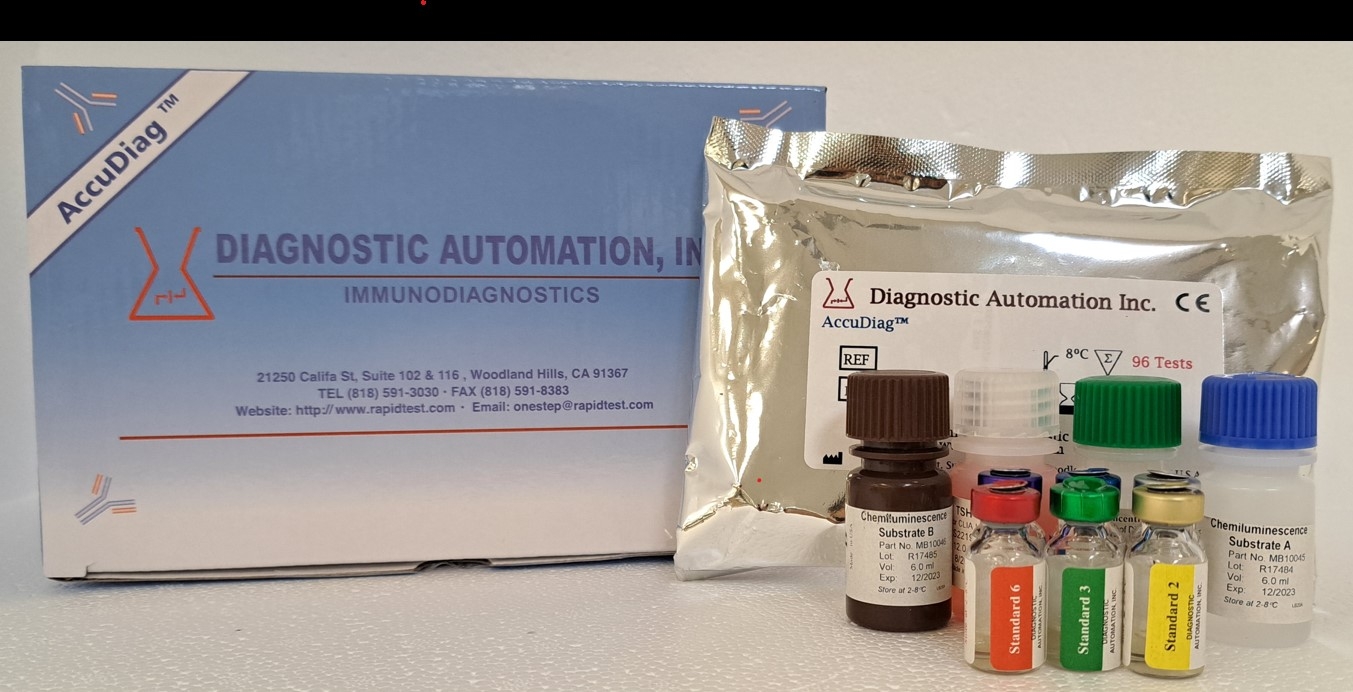
Material Provided with TSH ultra ELISA Kit:
1. U-TSH Kit Antibody-coated microplate wells
2. U-TSH EIA Test Set Reference
3. U-TSH EIA Test Enzyme Conjugate Reagent
4. TMB Substrate
5. Stop Solution
6. Wash Buffer Concentrate 50X
Materials Required, not Provided:
1. Precision pipettes
2. Distilled or deionized water
3. EIA kit Microplate Washer
4. EIA kit Microplate Reader with a 450 nm
U-TSH ELISA Kit Background Information:
The determination of serum or plasma levels of thyroid stimulating hormone (TSH) or Thyrotropin is recognized as a sensitive method in the diagnosis of primary and secondary hypothyroidism. TSH is secreted by the anterior lobe of the pituitary gland and induces the production and release of thyroxine and triiodothyronine from the thyroid gland. The release of TSH is regulated by a TSH-releasing hormone (TRH) produced by the hypothalamus. The levels of TSH and TRH are inversely related to the level of thyroid hormone. TSH and the pituitary glycoproteins: luteinizing hormonee (LH), follicle-stimulating hormone (FSH), and human chorionic gonadotropin (hCG), have identical alpha chains. The beta chain is distinct but does contain identical amino acid sequences, which can cause considerable cross-reactivity with some polyclonal TSH antisera. The use of a monoclonal antibody in this TSH EIA test eliminates this interference.
U-TSH ELISA Test Principle:
The Ultra Sensitive TSH ELISA test is based on the principle of a solid phase enzyme-linked immunosorbent assay. The assay system utilizes a unique monoclonal antibody directed against a distinct antigenic determinant on the intact TSH molecule. Mouse monoclonal anti-TSH antibody is used for solid phase immobilization (on the microtiter wells). A goat anti-TSH antibody is in the antibody-enzyme HRP conjugate solution. The test sample is allowed to react simultaneously with the two antibodies, resulting in the TSH molecules being sandwiched between the solid phase and enzyme-linked antibodies. For additional details please refer to the instructions for use.
Diagnostic Automation Inc. also provides other Thyroid ELISA Kits. For more information about ELISA Kits, Rapid Tests, IFA Kits, CLIA Test Kits, or Serology tests, please see our website home page, or contact our Customer Service Representatives at 818-591-3030 .